Read to Reap!

My attempt at making this a "reading mall"!

Sunday, March 18, 2012

The wolf who lived for the pack
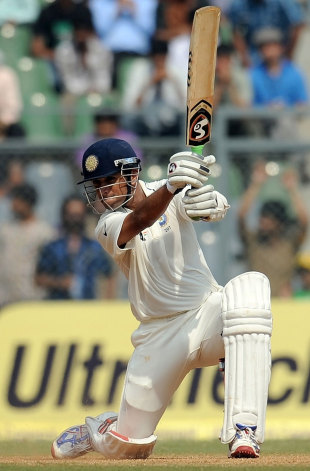


Rahul Dravid drives fluently through the covers, India v West Indies, 3rd Test, Mumbai, 3rd day, November 24, 2011
Rahul Dravid: attractive and correct on and off the field © AFP
Enlarge
http://www.espncricinfo.com/magazine/content/story/556769.html


Rahul Dravid batted exactly like the person he is: stately and upright, dignity and poise his two shoulders, standing up to everything coming at him with minimum fuss. He picked his shots carefully, almost like he was weighing the risk for fear of letting himself and his side down. There was little about him that was flamboyant - there isn't with an oak - and patiently, brick by brick, he built giant edifices. He is a good man and he batted like a good man. 

And like with most of his choices in life, he has chosen well again. He has not craved a full house on its feet, there has been no grandstanding. The retirement is a sports-page event not a gossip item. He knew it was time. "I'm sure you have thought it through," I said when he called. "I know this is the time," he said. "Any longer and it will be for the wrong reason." I expected nothing less from a man it has been my privilege to watch and to know for 16 years. 

It was but a feather that prevented him from getting a century on debut at Lord's. He would have liked it, for he has this sense of history about him. He would have wanted to be on that honours board, and 15 years later he inscribed his name there with a Dravid special. They love him there like he is one of their own, and indeed England has been a recurring motif in his life. The 1999 World Cup; the majesty of 2002, when he outbatted the world and produced one of his finest innings in Leeds; winning a series as captain in 2007; and then those three centuries last year that reminded us once again what Test cricket was all about.
At Lord's he remained not out from No. 3; at Trent Bridge he opened the batting and was ninth out; and at The Oval, at the age of 38, he had but ten minutes between deliveries as he batted through the innings for six and a half hours, before returning to open the batting. A standing ovation had just died down before another took its place. I stood too, not for the first time. 

And he loved to explore England, on foot, in buses and in trains; always asking about the latest musical and offering extended reviews of those he had seen. One such exploration took him to Scotland, from where he returned humbler, if that was indeed possible. He was getting paid to play, he said, but everyone else was paying to play - taking unpaid leave, shutting down shops, all for the sheer joy of playing. He learnt, he said, how much you can take for granted as an international star. I can see why he will continue to be a giver, why his doors will be open for other cricketers. And I hope they learn from him never to say no. 

There were two things Dravid didn't really love in cricket: opening the batting and keeping wicket. He was asked to do both at various times, and I asked him if he ever contemplated saying no. He didn't enjoy it, he said, but took it as a challenge, to see how good he could be. This acceptance of challenges is what has defined his cricket and made him one of the finest team players there has been. A challenge, he said, allowed him to understand himself better, it gave him a reason to play sport. If he shied away, he would never know how good he could be. He kept wicket in about 70 one-day internationals, never most convincingly, but he allowed himself to look bad for the team to look good. It was always the team for him and in the little piece he wrote for the book that my wife Anita and I did, he quoted Kipling: for the strength of the wolf is the pack and the strength of the pack is the wolf. It was nice to see a cricketer quoting from literature.


It is away that the most memorable innings were played; in New Zealand in 1999, England in 2002, Australia and Pakistan in 2003-04, and in the West Indies in 2006. To that extent, he was the true successor to Sunil Gavaskar


The team is like a pot, Dravid often says. Some put in and some take out. The more who put in, the fuller it gets, and those were the players he enjoyed playing with the most: those who put into the pot. He was one of the leading contributors and there was never an effort at gaining sympathy or media attention for it. He gave quietly. He was one of the reasons why India recovered so quickly from the match-fixing issue around the turn of the century. India had some outstanding men of integrity at the time. Tendulkar, Dravid, Kumble, Ganguly, Laxman and Srinath. It was a good group to belong to. 

The turn of the century was also the coming of age of Dravid as an international cricketer. He had proved people wrong about his ability to play one-day cricket at the World Cup but then went to Australia convinced he needed to do well there to gain respect. It is a word he will often use in conversation ("the respect in your dressing room and that of your opponents is what matters") but in quest of it that time, he tried too hard, cocooning himself into a mass of nervous energy. He struggled but returned in 2003, at the height of his powers as a batsman, to peel off a double-century in Adelaide that won India a famous Test.
He scored many in that phase, most of them away and throughout his career, his home and away averages have sat close together. It is the mark of a genuinely great player. And it is away that the most memorable innings were played: in New Zealand in 1999, England in 2002, Australia and Pakistan in 2003-04, and in the West Indies in 2006. To that extent he was the true successor to Sunil Gavaskar. 

And his father will be proud of that. Oh, we family folk are suckers for that kind of sentiment. In 1994, when I used to do the highlights of domestic cricket for ESPN, Dravid's father would often call to ask if he could get highlights of his son's batting. The request was always very politely made and a thank you was always offered when I met him. You can see the shyness in the genes, the correctness. I don't mention it lightly. In our obsession with saluting the here and now we sometimes ignore what produced success. If Dravid senior was proud of his young man, Rahul was proud enough of his mother to be the photographer when she received her PhD. It might seem a small thing to do but it tells you a lot about the person. Giant edifices are built on solid foundations. 

And so it is with a touch of emotion that I will say goodbye to India's finest No. 3. He wasn't the Wall, not for me. Yes, his defence was as perfect as it could get, his steeliness so admirable, but he played shots that warmed the heart. The cover drive, with the big stride forward, and the prettiest of them all - the whip through midwicket played so late and while so nimble on his toes. 

He will be missed, as the great always are. He will see his children grow, take them to school, imbibe in them the reading habit (for he read more than most people I know and couldn't understand why others didn't), but from time to time he must tell the new flowers that will inevitably bloom in our cricket of the need to put grit over beauty, team over self, challenge before rejection, humility before arrogance, for that is what he stood for. 

Well played, my friend. You have the honour of leaving the game richer with your legacy and none of us can ask for anything more than that. 

Harsha Bhogle is a commentator, television presenter and writer. His Twitter feed is here
RSS Feeds: Harsha Bhogle
© ESPN EMEA Ltd.

My husband, the perfectionist


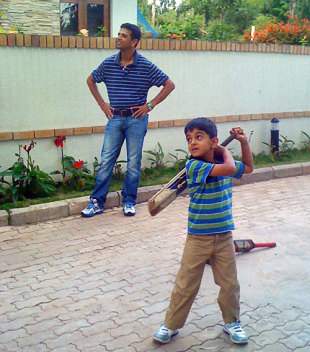
Rahul Dravid plays with son Samit outside their home in Bangalore, March 10, 2012
Dravid watches his son Samit play outside their home in Bangalore © ESPNcricinfo Ltd
Enlarge
Related Links
Tributes : Stylish in the trenches
Harsha Bhogle : The wolf who lived for the pack
Sambit Bal : Your regular, everyday superstar
Players/Officials: Rahul Dravid
Teams: India
I've been married to Rahul for almost nine years now and we have always been very private people. So I'm sure he will be astonished to find that I have written at length about him. 

This is not meant to be a song of praise for him on his retirement; that is up to the rest of the world. I am his wife, not a fan, and the reason I am writing this is to give you an insight into the role cricket has played in his life, and to take that in for myself at the end of his 16-year international career. 

Just after we got married, I remember him saying to me that he hoped to play for "the next three or four years", and that he would need me there to support him in that time. Now that he has retired, I think: "Not bad. We've done far better than the three or four years we thought about in May 2003." 

The last 12 months were special for us for more reasons than the runs or centuries Rahul has scored. After the 2010-11 tour of South Africa, our older son, Samit, suddenly developed a huge interest in cricket. When he watched Rahul score his centuries in England last year, it was as if in the last year of his career, Rahul had found his best audience. 

I was with the boys at Old Trafford when Rahul played his first (and last) Twenty20 international and then also travelled to every match of the one-day series. After the last ODI, we went into the Lord's dressing room and showed Samit and Anvay their baba's name on the honours board. It was a huge thrill for the boys to see Rahul play live in front of so many people, to see him at his "work", which kept him away from them for months. 

Cricket has been the centre of Rahul's world and his approach to every season and series has been consistent in all the time we have been married. Methodical, thoughtful and very, very organised. When I travelled with him for the first time, in Australia in 2003-04, I began to notice how he would prepare for games - the importance of routines, and his obsession with shadow practice at odd hours of day or night. I found that weird. Once, I actually thought he was sleepwalking! 

Now I know that with Rahul's cricket, nothing is casual, unconscious or accidental. Before he went on tour, I would pack all his other bags, but his cricket kit was sacred - I did not touch it; only he handled it. I know if I packed only two sets of informal clothes, he would rotate them through an entire tour if he had to and not think about it. He has used one type of moisturising cream for 20 years because his skin gets dry. Nothing else. He doesn't care for gadgets, and barely registers brands - of watches, cologne or cars. But if the weight of his bat was off by a gram, he would notice it in an instant and get the problem fixed. 

Cricket has been his priority and everyone around him knows that. On match days Rahul wanted his space and his silence. He didn't like being rushed, not for the bus, not to the crease. All he said he needed was ten minutes to himself, to get what I call his "internal milieu" settled, before he could go about a match day.
When we began to travel with the kids - and he loved having them around during a series, even when they were babies - we made sure we got two rooms. The day before every game, the boys were told that their father had to be left alone for a while, and Rahul would go into his room for his meditation and visualisation exercises. On the morning of the game, he would get up and do another session of meditation before leaving for the ground. I have tried meditation myself and I know that the zone he gets into as quickly as he does - it takes lots of years of training to get there. It is part of the complete equilibrium he tries to achieve before getting into a series. 

Like all players, Rahul has his superstitions. He doesn't try a new bat out for a series, and puts his right thigh pad on first. Last year before the Lord's Test, he made sure to sit in the same space Tillakaratne Dilshan had occupied in the visitors' dressing room when he scored nearly a double-hundred earlier in the season. Rahul scored his first hundred at Lord's in that game.


If I packed only two sets of informal clothes, he would rotate them through an entire tour if he had to and not think about it. He doesn't care for gadgets, and barely registers brands - of watches, cologne or cars. But if the weight of his bat was off by a gram, he would notice it in an instant and get the problem fixed


Once the game is on, at the end of every day he has this fantastic ability to switch off. He may be thinking about it, his batting may bother him, he will be itching to go back and try again, but he can compartmentalise his life very well. He won't order room service or brood indoors, he would rather go out, find something to do - go to a movie or watch a musical, which he loves. He will walk out to the sea to wind down or go to bookstores, or find something else to do. 

He has dealt with all that goes on in cricket because he can separate the game and the rest of his life and put things in perspective. No matter what was happening in his cricket, at home he is husband, father, family man. He has never said, "Oh I've had a bad day." He wouldn't speak about his work unless asked. Other than dropped catches.
Only once, I remember, he returned from a Test and said, "I got a bit angry today. I lost my temper. Shouldn't have done that." He wouldn't say more. Many months later, Viru [Sehwag] told me that he'd actually thrown a chair after a defeat to England in Mumbai. He'd thrown the chair, Viru said, not because the team had lost but because they had lost very badly. 

One of Rahul's great strengths is his ability - and he has had it all along - to accept reality. He believes you cannot complain about anything because there is no end to complaining. And he knows there is no end to improving either. He always looks within, to gain, to learn and to keep working at his cricket. 

In the last few years he worked doubly hard to make sure he played the game in his best physical condition in the toughest phase of his career physically. He tried to understand his body and work on his limitations - he was able to hold off shoulder surgery despite a problem in his rotator cuff because he found ways to keep it strong. When I was pregnant with Samit, we spent two months in South Africa to work in a sports centre that focused on strengthening Rahul's shoulder. Because he sweats profusely, he has even had sweat analysis done, to see how that affects his batting. He found that Pat Rafter, the former Australian tennis player, had a similar problem. 

To get fit, he went on very difficult protein diets for three months at a stretch, giving up rice, chapatis and dessert altogether - even though he has a sweet tooth. He wanted his batting and his cricket to benefit from his peak fitness, even heading into his late 30s. He has been to see a specialist in eye co-ordination techniques, for eye exercises for the muscles of his eyes. If there was a problem, he always tried to find answers. 

Outside cricket, Rahul is a man of no fuss. If he's on a diet, he will eat whatever is served, as long as it fits the diet. Even if the same food keeps turning up on his plate for days in a row, he will eat it without complaint. If he drops a catch, though, it bothers him enough to talk about it on the phone when we speak in the evening; during matches, it is the only part of cricket that he will talk about without me asking him about it. In 2009 he lost his old, faded India cap, when it was stolen from a ground. He was very, very upset about it. It was dear to him and he was extremely proud to wear it. 

People always ask me the reason for Rahul being a "normal" person, despite the fame and the celebrity circus. I think it all began with his middle-class upbringing, of being taught to believe in fundamental values like humility and perspective. He has also had some very old, solid friendships that have kept him rooted.
He is fond of reading, as many know, and has a great sense of and interest in history of all kinds - of the game he plays and also of the lives of some of the world's greatest men. When he started his cricket career, he had a coach, Keki Tarapore, who probably taught him to be a good human being along with being a good cricketer. 

All of this has given Rahul a deep understanding of what exactly was important about his being in cricket and what was not. It can only come from a real love for the game. When I began to understand the kind of politics there are in the game, he only said one thing: that this game has given me so much in life that I will never be bitter. There is so much to be thankful for, no matter what else happens, that never goes away.

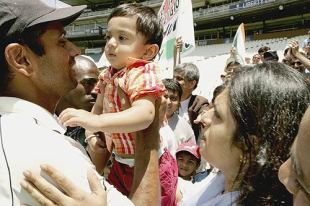
Rahul Dravid celebrates with son Samit and wife Vijeta,South Africa v India, 1st Test, Johannesburg, 4th day, December 18, 2006
Dravid with Vijeeta and Samit after the victory in the Johannesburg Test in 2006 © AFP
Enlarge

Cricket has made Rahul who he is, and I can say that he was able to get the absolute maximum out of his abilities as an international cricketer. 

What next for him? I know he likes his routine and he's in a good zone when he is in his routine, so we will have to create one at home for him. Getting the groceries could be part of that. A cup of tea in the morning for his wife would be a lovely bonus, I would think, particularly now that he doesn't have to take off for the gym or for training at the KSCA at the crack of dawn. 

More seriously, though, I think he will spend time relaxing and reading to let it all sink in a bit. He has loved music and wants to learn how to play the guitar. Then perhaps he would like to find something that fills in at least some of the place that cricket occupied in his life, something challenging and cerebral.
Rahul has lived his dream and he thinks it's time to move on. Retirement will mean a big shift in his life, of not have training or team-mates around him, or the chance to compete against the best. The family, though, is delighted to have him back. 

Vijeeta has been married to Rahul Dravid for nine years. They have two sons
© ESPN EMEA Ltd.

The tale of 2 Rahuls


Politics is the original 'dirty picture', cruel and ruthless. Last week, on the day the legendary Rahul Dravid announced his retirement from international cricket, an sms doing the rounds said: "Why has the wrong Rahul retired?" The Uttar Pradesh defeat has suddenly led to obituaries being written of Rahul Gandhi, the same Rahul whose each and every move, during the elections, was followed by a frenzied media. Perhaps, for a few days, the political Rahul might have felt like his cricketing namesake. After all, soon after the Australia tour debacle, we had cricket fans calling for the removal of the 'senior' players. They conveniently forgot that Dravid had scored four remarkable centuries in five games only months earlier in England. Politics, like cricket, can be extraordinarily fickle. 

That's where though, I am afraid, the comparisons between the two Rahuls might end. Dravid, after all, represents a triumph of middle class India blessed with solid old-fashioned values of hard work and determination. He did not arrive on the cricket scene with a silver spoon or with a famous surname. It is often forgotten that Dravid had to play almost half a dozen years in the Ranji Trophy for Karnataka before he was picked for the country for the sheer weight of his runs. Cricket is the ultimate meritocracy where talent, and not lineage, matters.

By contrast, in politics, especially the Congress party, only family appears to matter. Sriprakash Jaiswal (this government's foot-in-the-mouth prize-winner) revealed the sycophantic Congress mindset when he claimed that Rahul Gandhi could be Prime Minister if he wanted so even at midnight. Defeats like UP are, to that extent, only minor blips in Rahul's political career since for the average Congressman, the Gandhi family is preordained to rule India. 

Rahul Dravid had to prove himself in Karnataka before he could aspire to play for India. Rahul Gandhi, it seems, faces no such similar 'shop floor' test. What is true of the Gandhis at the Centre is true to a lesser or greater degree in most states and political parties except the Left and the BJP. Even the latest political posterboy, Akhilesh Yadav, would not be the UP chief minister at 38 if he were not Mulayam Singh Yadav's son. 

Rahul Dravid's career also represents the ultimate triumph of placing the team above the individual. Whether be it his brave decision to declare an innings when the mighty Tendulkar was batting on 194 in a Test match, or taking on the unfamiliar role of a wicket-keeper, Dravid always put his team first. By contrast, the Uttar Pradesh election became more about Brand Rahul when it really should have been structured around Team Congress. It would be unfair to blame Rahul Gandhi for this but the fact is the era of an Indira-like politician with a cross-class, cross-caste appeal is truly over. Individual charisma alone will not win you an election; a strong grassroots organisation will give you a distinct edge in a competitive election space. 

Rahul Dravid's greatness can also be measured by the fact that he did not resort to theatrics at any stage in his long career which explains why he is so universally respected in the cricket world. Rahul Gandhi, by contrast, has shown a proclivity for political theatre. Be it staying in a Dalit's home for a night or tearing up the Samajwadi Party manifesto at a public meeting, there is a touch of histrionics in his politics that can be self-defeating. We live in an age where an earthy 'rootedness' is often more appreciated than designer flamboyance. Building a political organisation is not like a T 20 match; it requires dogged persistence to overcome all obstacles over a lengthy period of time. 

What is also striking about Rahul the cricketer is how he always raised the bar for himself. When he started off in his career, he was seen as little more than a solid Test match player. Over time, he evolved into a top class One Day player. By the end of his career, he was a shot maker good enough to be picked for 20-20 cricket. From being a useful slip fielder, he ended his career by becoming the first fielder to take more than 200 catches. At every stage, it seemed as if he wanted to take on a new challenge that would stretch his abilities to the limit.

By contrast, Rahul Gandhi still hasn't been able to take his politics to the next level, quite simply because we still don't know who the real Rahul is, despite him being in public life now for almost a decade. Encircled by security and a small coterie of advisers, he hasn't really opened himself up for scrutiny. Yes, his Hindi and oratorical skills have shown a staggering improvement and his acceptance of personal responsibility for the UP defeat was a step in the right direction. But we still don't have a clear idea where he stands on most critical issues of national importance. Even his one intervention during the Lokpal debate was a prepared speech rather than a spontaneous expression of his political beliefs. At 41, he still seems somehow stuck in the image of a youth leader, still discovering India rather than one ready to lead it.

Rahul Dravid spent most of his career under the shadow of the great Tendulkar. But he never let that overawe him. Rather, he used the opportunity to carve out an independent identity for himself, emerging as Indian cricket's man for all seasons. Like 'The Wall,' who went on to become the country's finest ever number three batsman. Rahul too has grown up in the shadows, in a way, of the Indira-Rajiv-Sonia triumvirate. It's time now for him to break free and become his own man. In cricketing terms, he needs to raise his game before it's too late.